Season 1 – Widow’s Bay Review: A Sharp, Spooky Horror-Comedy with Real Bite
Season 1 – Widow’s Bay arrives with the confidence of a show that knows exactly how strange it wants to be. Set on a cursed New England island where civic pride, local superstition, and something much darker collide, the Apple TV series blends coastal mystery, deadpan comedy, and genuine horror into one of the more distinctive genre offerings of 2026. Created by Katie Dippold and led by Matthew Rhys, the first season builds its appeal not through nonstop shocks, but through atmosphere, character tension, and the slow realization that the locals may not be exaggerating after all.
Season 1 – Widow’s Bay: What Is the Story About?
The premise is simple but rich: Mayor Tom Loftis wants to turn Widow’s Bay into a tourist destination. The town is isolated, struggling, and wrapped in legends that most outsiders would dismiss as small-town folklore. Tom, played by Matthew Rhys, is desperate to improve life for the community and create a better future for his teenage son. The problem is that the island’s old stories begin to look less like superstition and more like warnings.
That setup gives Widow’s Bay a strong engine. The show is not just about whether the island is cursed. It is about what happens when a man tries to sell a place he does not fully understand, while the people around him have learned to survive by respecting the things he refuses to believe. The result is part haunted-island mystery, part workplace comedy, part grief story, and part coastal nightmare.
A Horror-Comedy That Actually Balances Both Sides
Many horror-comedies lean too far in one direction. They either soften the horror until nothing feels dangerous, or they use jokes as nervous filler between scares. Widow’s Bay is stronger than that. The comedy comes from character, not from undercutting the threat. The townspeople are odd, blunt, defensive, and often very funny, but the danger around them is treated with enough seriousness to keep the season from becoming parody.
The show’s humor is especially effective because it often comes from denial. Tom wants rational explanations. The locals want him to stop tempting fate. Everyone seems to know more than they are saying, yet no one behaves like a typical horror victim. That tension gives the season its best rhythm: a public-relations problem becomes a supernatural incident; a civic event turns into a nightmare; a charming local tradition suddenly looks like a survival ritual.
Matthew Rhys Gives the Season Its Nervous Heart
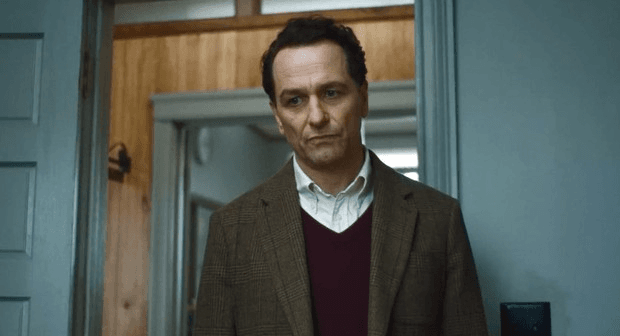
Matthew Rhys is the anchor of Widow’s Bay. As Mayor Tom Loftis, he plays a man caught between public responsibility, private fear, and emotional exhaustion. Tom is not written as a fearless hero. He is anxious, defensive, sometimes foolish, and often visibly out of his depth. That makes him far more interesting.
Rhys is especially good at showing panic without turning Tom into a cartoon. His reactions are funny because they feel honest. When the island’s horrors close in, the performance keeps a human pulse beneath the absurdity. You can laugh at Tom’s stubbornness while still understanding why he clings to denial. In a show full of eerie mythology and strange local behavior, Rhys gives the audience someone recognizably flawed to follow.
Kate O’Flynn, Stephen Root, and the Ensemble Add Texture
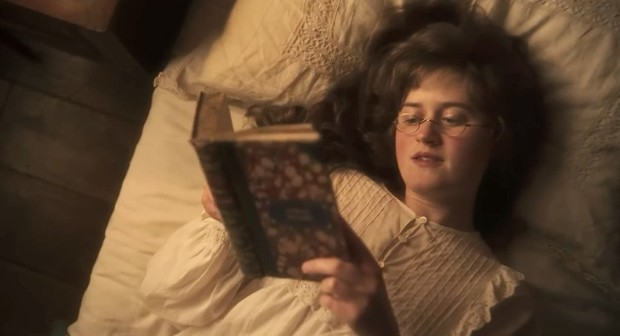
The supporting cast is one of the season’s biggest strengths. Kate O’Flynn brings sharp timing and quiet emotional weight to Patricia, Tom’s assistant, while Stephen Root gives Wyck the kind of offbeat authority that makes even the strangest local warnings sound weirdly credible. Kevin Carroll, Dale Dickey, and Kingston Rumi Southwick help round out the island community, giving Widow’s Bay the feeling of a place with its own rules, grudges, and shared history.
What works well is that the ensemble never feels like decoration around the lead. Each character seems shaped by the island in some way. Some have accepted its darkness. Some explain it away. Some appear to know exactly how bad things can get. That layered community feeling is essential to the show’s atmosphere.
Direction and Atmosphere: Coastal Beauty with Something Rotten Underneath
Visually, Widow’s Bay understands the power of contrast. The town has postcard appeal: water, fog, old buildings, local rituals, and the kind of coastal charm that should attract tourists. But the direction keeps twisting that beauty into unease. A beach can feel inviting one moment and hostile the next. A quiet street can look charming until the silence starts to feel staged.
Hiro Murai’s involvement is important to the season’s tone. Apple’s press materials note that Murai directs five episodes, with Ti West, Sam Donovan, and Andrew DeYoung also directing during the season. That mix helps explain why the show can move between comic awkwardness and real menace without losing its identity.
The best scenes often let the environment do the work. The fog, the water, the lack of easy connection to the outside world, and the town’s physical isolation all feed the feeling that Widow’s Bay is not just a setting. It is a force.
The Writing Finds Fresh Life in Familiar Horror Ideas
On paper, the show uses recognizable genre pieces: a cursed town, strange locals, old legends, a skeptical authority figure, and a community that may have made peace with forces it cannot control. What makes Season 1 – Widow’s Bay engaging is not that every idea is new. It is that the writing approaches familiar tropes with personality.
Katie Dippold’s background in comedy shows in the structure of conversations and the way scenes build to awkward, unsettling punchlines. But the show does not feel like a sketch stretched into a series. It has mythology, emotional stakes, and enough mystery to keep viewers moving from one episode to the next.
The season also has a clever sense of escalation. Early episodes invite viewers into the town’s oddness. Later episodes deepen the sense that the island’s legends are connected to real consequences. The storytelling is accessible without becoming too obvious, which makes the show easy to watch but still rewarding.
Themes: Denial, Grief, Tourism, and Local Memory
Beneath the scares, Widow’s Bay is a story about denial. Tom wants progress, investment, and optimism. The town carries memory, fear, and inherited trauma. That conflict gives the season more emotional weight than a simple monster-of-the-week structure would allow.
There is also a sharp satirical edge in the tourism angle. Tom is trying to rebrand a place that may be fundamentally unsafe. The idea of packaging danger as charm feels funny, but it also gives the show bite. Widow’s Bay becomes a place where history cannot be turned into marketing copy without consequences.
The father-son element adds another layer. Tom’s choices are not only political or economic. He is trying to build something for his child, even when he does not fully understand what he is building on. That emotional pressure helps ground the supernatural plot.
Pacing: Mostly Strong, with a Few Uneven Turns
The pacing is one of the reasons the season works as well as it does. Episodes are relatively tight, and the show rarely feels bloated. Apple TV lists early episodes in the 36-to-41-minute range, which suits the tone: long enough to build atmosphere, short enough to avoid dragging.
That said, the season is not perfectly even. Some episodes balance horror and comedy more elegantly than others. A few supporting threads feel more intriguing than fully developed, and certain mythology-heavy moments may leave viewers wanting cleaner emotional payoff. But these issues rarely derail the experience. If anything, the show’s slightly messy ambition is part of its charm.
Scares, Laughs, and Emotional Impact
The horror in Widow’s Bay is less about extreme violence and more about the feeling that the island’s logic is slowly replacing normal reality. The show has jump scares and creature-driven moments, but its strongest fear comes from inevitability. People warn Tom. He ignores them. Then the island responds.
The comedy keeps the season from becoming oppressive, but the emotional impact sneaks in gradually. Tom’s grief, Patricia’s loyalty, the town’s collective dread, and the teenager’s place within this strange inheritance give the story enough human feeling to matter. By the later episodes, the island’s curse is not just a plot device. It becomes a test of what people will deny, sacrifice, or protect.
Strengths of Season 1 – Widow’s Bay
The biggest strength of Season 1 – Widow’s Bay is tone. It is genuinely difficult to make a show that is creepy, funny, sincere, and strange without making one of those qualities feel forced. This season pulls it off more often than not.
The performances are another major asset. Matthew Rhys gives the show emotional credibility, while Kate O’Flynn and Stephen Root help define its comic and supernatural rhythm. The world-building is also strong. Widow’s Bay feels lived-in, not just invented for a single mystery.
The show also benefits from restraint. It does not rush to explain everything. It trusts mood, character, and suggestion. That patience gives the season a distinctive personality in a crowded streaming landscape.
Where the Season Could Be Stronger
The main weakness is that the show occasionally seems more interested in its atmosphere than in giving every subplot equal weight. Some viewers may want more direct answers sooner, especially as the mythology expands. Others may find the tonal shifts unusual if they expect a straightforward horror series or a pure comedy.
There are also moments where the island’s eccentricity threatens to become too neatly quirky. The show usually avoids that trap, but a few scenes come close. When Widow’s Bay is at its best, the town feels funny because it is frightened. When it is slightly less effective, the oddness feels a bit more designed.
Is Widow’s Bay Worth Watching?
Yes. Season 1 – Widow’s Bay is worth watching for viewers who enjoy horror-comedy with atmosphere, character-driven storytelling, and a strong sense of place. It should especially appeal to fans of cursed-town mysteries, coastal thrillers, dark comedy, supernatural folklore, and shows that prefer slow-burn dread over constant explanation.
It is not the cleanest or safest genre series of the year, but that is part of why it stands out. Widow’s Bay has its own rhythm, its own sense of humor, and its own strange mythology. The first season proves that the show is more than a quirky premise. It is a sharp, confident, and surprisingly emotional piece of genre television.
Verdict
Season 1 – Widow’s Bay is a smart, spooky, and sharply acted horror-comedy that turns a cursed New England island into one of the year’s most memorable TV settings. Matthew Rhys gives the season a vulnerable center, the ensemble adds personality and bite, and the writing finds humor without weakening the horror. It may leave a few mysteries hanging and occasionally wobble in tone, but its atmosphere, performances, and originality make it an easy recommendation.