
Can Solar-Powered LEDs Deliver Reliable Lighting With Fewer Repairs?
Think about the last time a streetlight near your facility stayed dark for days or the repair bill that followed a single storm. Outdoor lighting failures are not just inconvenient; they are expensive, repetitive, and completely avoidable with the right technology. Solar-Powered LEDs have quietly become the most practical answer to a problem that municipalities, property managers, and infrastructure teams have dealt with for decades. They cost less to maintain, last far longer than conventional fixtures, and keep working even when the grid does not.
What Are These Solar Lights and Why Are They Built Differently?
To understand why solar-powered LEDs are so effective at reducing maintenance, it helps to know what actually sets them apart from traditional outdoor lighting. A conventional streetlight is essentially dependent on two things: a functioning grid connection and a lamp that needs periodic replacement. Take either one away, and the light goes out. That dependency is built into the design, and it is precisely what makes conventional systems so expensive to maintain over time.
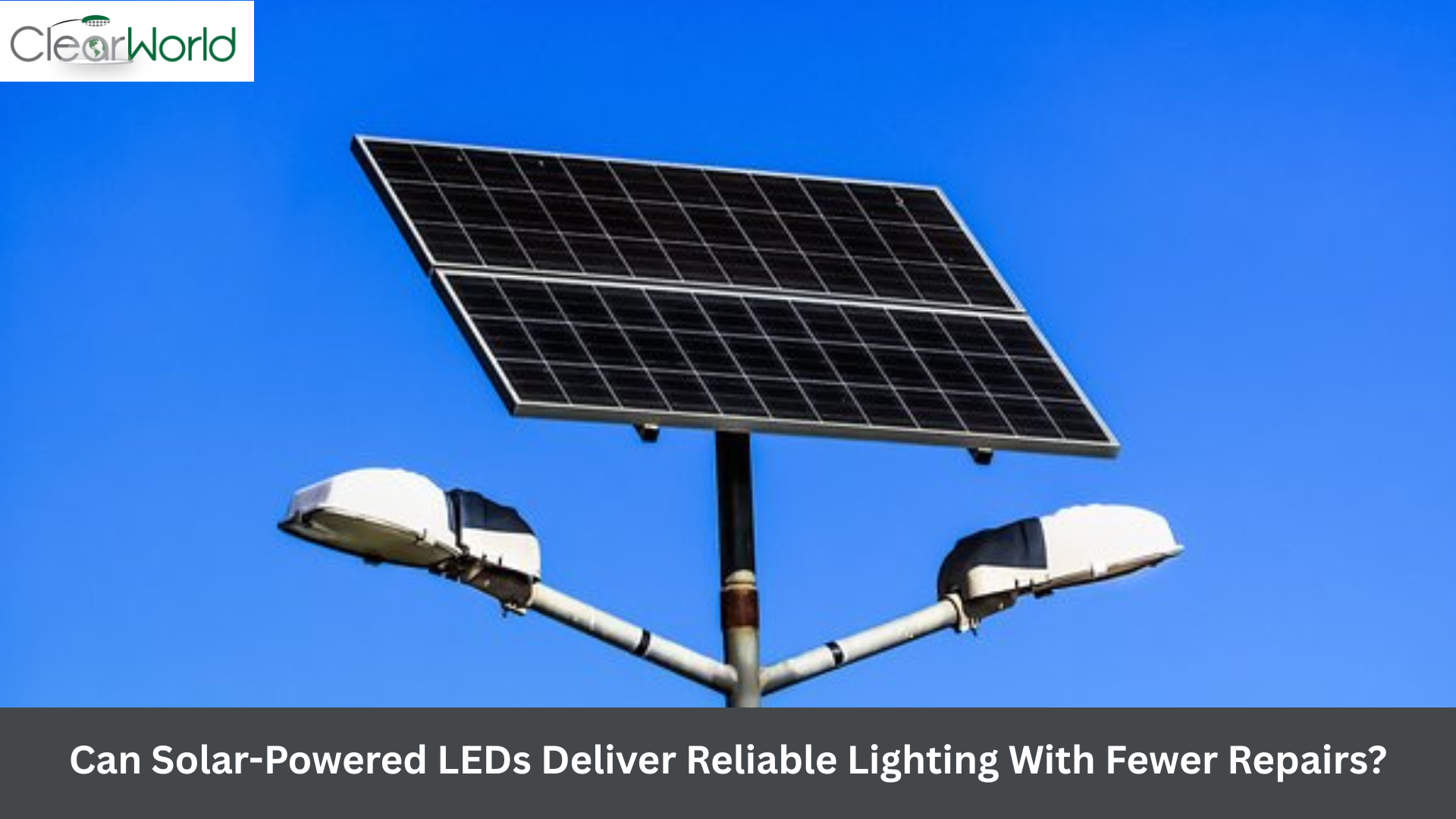
Solar LED systems work on an entirely different principle. Each unit is self-contained. A solar panel mounted on the pole or fixture captures sunlight during the day and stores that energy in an onboard battery. When night falls, the LED draws from that stored power and delivers consistent, reliable illumination, no utility line required, no underground cable running beneath the pavement, and no single grid fault capable of taking down an entire block of lights.
That independence is where the maintenance advantage starts.
No Underground Wiring, No Cascading Failures
Conventional outdoor lighting networks are only as strong as their weakest connection. Buried cables corrode. Distribution panels fail. A single fault on a shared circuit can darken dozens of fixtures at once, triggering emergency dispatch, excavation, and costly repairs. Solar-Powered LEDs units operate independently of each other. If one fixture develops an issue, the others keep running. Maintenance stays isolated, manageable, and far less urgent.
LED Lifespan Changes the Math Entirely
LED light sources are genuinely long-lasting in a way that older lamp technologies never were. Quality LEDs are rated for 50,000 to 100,000 hours of operation, roughly four to eight times longer than the metal halide or high-pressure sodium lamps still common in aging street lighting infrastructure. For a fixture running 12 hours a night, that means potential decades of service before a lamp replacement is even on the agenda. Fewer replacements translate directly into fewer maintenance visits, less labor, and lower total operating cost.
Panels and Batteries Built for the Outdoors
Modern solar panels used in outdoor LED lighting are engineered specifically for long-term field exposure. UV-resistant materials, sealed housings, and thermal tolerance across wide temperature ranges mean these panels hold up in real-world conditions, not just ideal ones. Paired with lithium battery systems and intelligent charge controllers that prevent both overcharging and deep discharge, today’s solar LED batteries are designed to last years between service intervals, not months.
These three factors build on each other. Less wiring complexity, longer-lasting light sources, and durable energy storage combine to create a system that simply requires less attention across its entire service life.
What Are the Maintenance Benefits That Actually Move the Budget?
Reducing maintenance is not just about fewer repair calls. It reshapes how operations teams plan, spend, and allocate resources. Solar-powered LEDs deliver five distinct advantages that collectively make a measurable difference.
Slashed Labor Costs
Every field repair involves more than a technician; it involves scheduling, vehicle deployment, and, in roadway applications, traffic control. These costs stack up fast. Solar LED systems fail less often, which means fewer dispatches, fewer hours billed, and a noticeably lighter maintenance labor line on the annual budget.
Isolated, Manageable Failures
Because each solar LED fixture operates independently, a malfunction in one unit stays contained. There are no cascading outages to chase, no emergency nighttime response calls, and no domino effect working against an operations team with limited staff.
Multi-Year Service Intervals.
When a system uses components rated for decades of use, the maintenance schedule changes significantly. Annual inspections can extend to multi-year cycles for many components. That predictability is valuable, it makes budget forecasting more accurate and reduces the reactive spending that unpredictable grid-tied systems generate.
Immunity to Grid Failures
Storms, infrastructure failures, and rolling outages take down conventional outdoor lighting with no warning and no easy fix. Solar-powered LEDs simply keep operating. The battery carries the system through the night regardless of what is happening on the utility side of things, removing an entire category of reactive maintenance from the picture.
Retrofit-Ready Installation
Solar LED technology can be installed on existing poles without tearing up infrastructure. This retrofit capability eliminates excavation, conduit work, and the post-installation problems that often follow disruptive ground work, making the transition smoother and reducing the chance of creating new maintenance headaches in the process.
Every one of these benefits points in the same direction: less reactive spending, more operational control, and a lighting system that works for the team managing it rather than against them.
Where These Systems Are Already Delivering Results
The maintenance case for Solar-Powered LEDs is not hypothetical; it is visible in the field across a wide range of applications.
Municipal Street Lighting: Cities are retiring aging grid-tied fixtures and moving to solar LED street lights to cut utility dependency, eliminate storm-related outages, and reduce the labor burden of maintaining sprawling electrical networks across large service areas.
Parking Lots and Commercial Properties: Property managers appreciate both the installation simplicity and the long-term hands-off operation. No trenching, no complex wiring, and LED lifespans that push major component replacements far into the future.
Parks and Public Recreational Spaces: Remote paths, open green spaces, and areas far from electrical infrastructure are natural fits for solar LED lighting. These installations deliver reliable light without the cost and complexity of extending power lines across difficult terrain.
Campuses and Institutional Facilities: Universities, healthcare campuses, and government properties running large outdoor lighting networks find that solar LED retrofits meaningfully reduce the workload on in-house facilities teams while supporting long-term sustainability goals.
Highways and Infrastructure Corridors: In locations where grid access is limited, expensive, or simply impractical, solar LED lighting keeps critical visibility maintained with minimal service intervention, a genuine safety advantage, not just an operational one.
Conclusion
Outdoor lighting maintenance is a real, recurring cost, and for most operations, it is also an underestimated one. Solar-Powered LEDs reduce that cost at every level: fewer component failures, longer service intervals, lower labor demands, and complete independence from the grid. For any facility, municipality, or infrastructure team serious about getting more reliability and less maintenance from their outdoor lighting, the shift to solar LED technology is not a future consideration; it is a present-tense solution.