
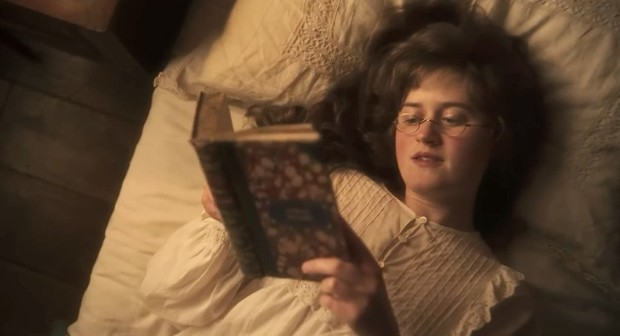
The Other Bennet Sister Season 1 Review: Mary Bennet Finally Gets the Story She Deserves
The Other Bennet Sister Season 1 arrives with a simple but surprisingly rich question: what if the most overlooked Bennet sister was never dull, only unheard? Built around Mary Bennet, the bookish middle daughter from Jane Austen’s Pride and Prejudice, this warm period drama takes a familiar literary world and shifts the emotional centre away from Elizabeth and Darcy toward someone who has usually been left at the edge of the drawing room.
Based on Janice Hadlow’s 2020 novel, the series follows Mary as she moves beyond Longbourn and searches for independence, love, confidence, and a sense of self-worth that has long been denied to her. The 10-part drama is adapted by Sarah Quintrell, with Maddie Dai writing one episode, and directed by Jennifer Sheridan and Asim Abbasi. Ella Bruccoleri leads the cast as Mary Bennet, alongside Ruth Jones, Richard E. Grant, Indira Varma, Richard Coyle, Laurie Davidson, and Dónal Finn.
A Jane Austen Spin-Off With a Real Reason to Exist
The danger with any Pride and Prejudice spin-off is obvious. Austen’s world has been adapted, reimagined, quoted, parodied, and romanticised so often that a new version needs more than bonnets, ballrooms, and a handsome suitor to justify itself. The Other Bennet Sister understands that. Its best quality is not nostalgia, although it certainly knows how to use it. Its strongest idea is perspective.
Mary Bennet has often been treated as a comic interruption: awkward at the piano, moralising at the wrong moment, and invisible beside the sparkling Elizabeth and the gentle Jane. Season 1 does not erase those traits. Instead, it asks where they came from. What looks like stiffness may be self-protection. What looks like dullness may be a young woman trying to be valued in a household where charm and beauty are treated like currency.
That emotional reframing gives the series its heart. It does not try to compete with Pride and Prejudice by making Mary into a second Elizabeth. It gives her a quieter, more inward journey, and that choice makes the drama feel sincere rather than opportunistic.
Story Overview: Mary Bennet Steps Out of the Shadows
The story begins in the familiar world of Longbourn, where the Bennet household is once again shaped by marriage prospects, social pressure, and the anxious energy of Mrs Bennet. But this time, the camera’s attention rests on Mary. While her sisters fit more comfortably into the expectations of Regency society, Mary struggles to understand a world that rewards prettiness, ease, and flirtation more readily than intelligence or seriousness.
As the season develops, Mary leaves the narrow emotional space of her family home and enters new circles in Regency London and beyond. The move gives her room to breathe. She is no longer simply the least admired Bennet sister; she becomes a governess, a guest, a friend, and eventually a woman capable of imagining a different life for herself. BritBox describes the series as Mary’s journey from Meryton to London and beyond in search of love, independence, and self-worth, which captures the emotional shape of the season without overstating it.
The plot has romance, of course, but the more rewarding love story is Mary’s gradual relationship with herself. Season 1 is most moving when it allows her growth to happen in small, believable steps: a conversation where she is finally listened to, a moment where she chooses what she wants, a look of surprise when kindness arrives without conditions.
Ella Bruccoleri Gives Mary Bennet a Beating Heart
Ella Bruccoleri is the reason The Other Bennet Sister Season 1 works as well as it does. Her performance never feels like a gimmick or a corrective lecture. She plays Mary as intelligent, anxious, proud, wounded, and funny in ways she does not always intend. There is a lovely tension in the performance: Mary wants to disappear, but she also desperately wants to be seen correctly.
Bruccoleri avoids turning Mary into a modern heroine simply dropped into Regency clothes. She lets the character remain socially uncomfortable, sometimes self-righteous, sometimes too eager to prove herself. That honesty matters. The show’s sympathy for Mary would feel thin if it made her flawless. Instead, her growth comes from learning how to soften without shrinking, and how to be serious without using seriousness as armour.
The supporting cast gives her journey texture. Ruth Jones brings a sharp, sometimes bruising energy to Mrs Bennet, making her less a harmless bundle of nerves and more a mother whose desperation has real consequences for the daughter who cannot perform femininity in the expected way. Richard E. Grant gives Mr Bennet a dry distance that can be amusing, but also quietly painful when viewed through Mary’s eyes. Indira Varma and Richard Coyle add warmth and steadiness as the Gardiners, whose household opens a different path for Mary.
The Romance Is Gentle, But the Self-Discovery Is Stronger
Period dramas often live or die by their romantic tension, and The Other Bennet Sister offers enough yearning, misunderstanding, and emotional hesitation to satisfy viewers looking for a gentle Regency romance. Laurie Davidson’s Mr Ryder and Dónal Finn’s Mr Hayward represent different possibilities for Mary, not only as romantic interests but as mirrors for the person she is becoming.
Still, the series is careful not to reduce Mary’s transformation to being chosen by a man. That is one of its most appealing qualities. The romance is part of her awakening, not the whole reward. The central question is not simply “Who will love Mary?” but “Can Mary believe she is worthy of love, respect, and attention before anyone else confirms it?”
That emotional emphasis gives the season a more modern resonance while keeping its period-drama shape intact. It speaks to anyone who has ever felt like the least impressive person in a room full of brighter personalities.
Writing and Direction: Respectful, Warm, and Occasionally Too Broad
Sarah Quintrell’s adaptation takes a clever route. Rather than treating Austen’s original as sacred material that cannot be touched, it approaches the world with affection and curiosity. The writing understands that Mary’s story needs both pain and humour. Her awkwardness is funny at times, but the joke is rarely simply on her. More often, the humour comes from the absurdity of a society that claims to value virtue while constantly measuring women by appearance, charm, and marriageability.
The direction by Jennifer Sheridan and Asim Abbasi keeps the tone accessible and lively. This is not a cold, museum-like period piece. It has brightness, movement, and a clear interest in emotional readability. The series wants viewers to feel Mary’s discomfort, not just observe it from a distance.
That said, the show is not always subtle. Some family dynamics are drawn with a heavy hand, especially when Mary is being dismissed or humiliated. At times, the series underlines her outsider status so firmly that viewers may feel the point has already landed. The early episodes, in particular, can lean a little too hard on the contrast between Mary and her more socially successful sisters.
Yet the drama becomes more confident as Mary’s world expands. Once she leaves the most familiar Pride and Prejudice territory, the series finds more space for character, emotional nuance, and surprise.
Visual Style: Cozy Regency Drama With a Sense of Place
Visually, The Other Bennet Sister offers exactly the kind of polished period atmosphere viewers expect from a BBC-style Austen drama: candlelit interiors, country houses, soft landscapes, carefully arranged rooms, and costumes that help define status, confidence, and character. The production was filmed across historic sites in Wales and England, with many interiors shot on Bad Wolf’s soundstages in Cardiff.
The locations do more than provide a pretty backdrop. Longbourn feels socially cramped, a place where Mary’s identity has already been decided for her. London brings bustle, possibility, and discomfort. The wider landscapes suggest release. The visual movement from confinement to openness mirrors Mary’s emotional journey without needing to announce it.
The costume work also supports the storytelling. Mary’s clothes are not treated as a magical makeover device. The more meaningful change is not that she becomes conventionally glamorous, but that she begins to look less trapped inside other people’s expectations. That restraint keeps the series from slipping into shallow transformation fantasy.
Pacing: Comforting, Sometimes Slight, But Easy to Stay With
As a 10-part season of half-hour episodes, The Other Bennet Sister has a pleasant rhythm. It is easy to watch, especially for viewers who enjoy character-led period drama rather than plot-heavy twists. The shorter episode length helps the series stay light on its feet, even when the emotional material is bruising.
Still, the pacing will not work for everyone. Some viewers may find the early Longbourn material familiar, especially because the show must reintroduce pieces of Pride and Prejudice from Mary’s angle before fully becoming its own story. There are moments when the drama feels slightly stretched, and a few scenes repeat the same emotional beat: Mary is ignored, Mary is misunderstood, Mary retreats.
But the season gains charm as it goes. The more it trusts Mary as a full protagonist rather than simply “the ignored sister,” the more rewarding it becomes. By the later stretch, the show has built enough emotional investment that even its quieter moments feel earned.
Themes: Beauty, Belonging, and the Cost of Being Misread
The strongest theme in The Other Bennet Sister Season 1 is the pain of being misread. Mary is surrounded by people who believe they already know what she is: plain, awkward, difficult, unmarriageable, useful only in limited ways. The series shows how damaging that kind of fixed family role can be.
It also explores the narrowness of social value in Regency society. Women are expected to be pleasing, accomplished, attractive, and marriageable, but not too intellectual, too intense, or too openly dissatisfied. Mary fails not because she lacks feeling, but because she cannot easily package herself in the form her world prefers.
This gives the show a gentle feminist edge without turning it into a lecture. Its ideas are built into drawing-room conversations, family tensions, romantic choices, and Mary’s private disappointments. The result is a period drama that feels emotionally current without forcing modern language into every scene.
What Works Best
The best thing about The Other Bennet Sister is its compassion. It takes a character who could have remained a footnote and gives her interior life, humour, desire, and dignity. Ella Bruccoleri’s performance anchors that approach beautifully, making Mary both specific to Austen’s world and recognisable to a modern audience.
The second major strength is the show’s balance of comfort and melancholy. It has the pleasures of a classic British period drama: elegant rooms, complicated manners, romantic hesitation, and family comedy. But underneath that coziness is a sharper story about emotional neglect and the slow work of rebuilding self-belief.
The ensemble also helps keep the series alive. The familiar Bennet family dynamics are refreshed by the shift in viewpoint, and the Gardiners bring a welcome warmth that prevents the drama from becoming too punishing.
Where It Falls Short
The main weakness is repetition. The show occasionally makes Mary’s suffering too explicit, especially early on. Viewers understand quickly that she is overlooked and undervalued, so repeated scenes of dismissal can feel less revealing over time.
Some characters are also broader than others. Mrs Bennet’s treatment of Mary, while dramatically effective, can sometimes feel sharpened to serve the new perspective. That does not ruin the series, but it does make certain moments feel less like Austen’s social comedy and more like modern emotional correction.
The show is also unlikely to win over viewers who dislike gentle, slow-burn period drama. Its pleasures are soft rather than explosive. It is more interested in emotional repair than scandal, and more invested in self-acceptance than high drama.
Overall Viewing Experience
The Other Bennet Sister Season 1 is a thoughtful, charming, and emotionally generous Austen-inspired drama. It does not replace Pride and Prejudice, and it does not need to. Its success lies in finding a new doorway into a beloved world and proving that Mary Bennet was never unworthy of attention — she was simply waiting for a story patient enough to listen.